---
title: "Best Reading Lamp for Over-60s: How to Choose | HomeSight"
description: Reading harder after 60? The right lamp cuts glare and eye strain. Our plain guide covers lumens, colour and light, plus when to book an eye test.
image: https://homesightonline.co.uk/hubfs/best-reading-lamp-for-over-60s-armchair..jpg
---
[Skip to content](https://homesightonline.co.uk/news-and-articles/how-to-choose-the-best-reading-lamp-when-you-are-over-60#main)
[0800 080 6095](tel:08000806095) [info@homesightonline.co.uk](mailto:info@homesightonline.co.uk) Mon–Fri 09:00 – 17:00
[ ](https://homesightonline.co.uk/)
Eye care
[Home eye tests A full one-hour examination in your own home](https://homesightonline.co.uk/eye-care) [NHS home eye tests Free if you qualify. Check the criteria](https://homesightonline.co.uk/nhs-home-eye-tests) [Care home eye care Visits for residents, reported to your team](https://homesightonline.co.uk/care-homes)
Hearing care
[Home hearing tests Free screening, full assessment at home](https://homesightonline.co.uk/hearing-care) [Hearing aids at home Tested, fitted and followed up at home](https://homesightonline.co.uk/hearing-aids-at-home) [Earwax removal at home Microsuction by an audiologist, at home](https://homesightonline.co.uk/earwax-removal-at-home) [Hearing aid help Cleaning, repairs and servicing at home](https://homesightonline.co.uk/hearing-aid-help)
Who we help
[Families and carers Arranging care for a parent or relative](https://homesightonline.co.uk/for-families) [Care homes Over 300 homes across the South East](https://homesightonline.co.uk/care-homes) [Areas we visit London, Essex, Hertfordshire, Kent, Surrey and more](https://homesightonline.co.uk/areas-we-visit)
About
[About HomeSight An NHS-contracted home eye care provider since 2010](https://homesightonline.co.uk/about) [News and articles Guides to eye and hearing care at home](https://homesightonline.co.uk/news-and-articles) [FAQs Answers to the questions we are asked most](https://homesightonline.co.uk/faqs) [Contact Call, email, or ask for a call back](https://homesightonline.co.uk/contact)
[Book a home visit](https://homesightonline.co.uk/book-a-home-visit) [Prefer to call 0800 080 6095](tel:08000806095)
[Home](https://homesightonline.co.uk/) › [News and Articles](https://homesightonline.co.uk/news-and-articles) › How to Choose the Best Reading Lamp When You're Over 60
Eye Health
# How to Choose the Best Reading Lamp When You're Over 60

By **Team HomeSight** · 9 min read · 11 July 2026 · Updated 26 September 2026 Checked for clinical accuracy by a HomeSight [GOC](https://optical.org/)-registered optometrist. [About HomeSight](https://homesightonline.co.uk/about).
Eye Care
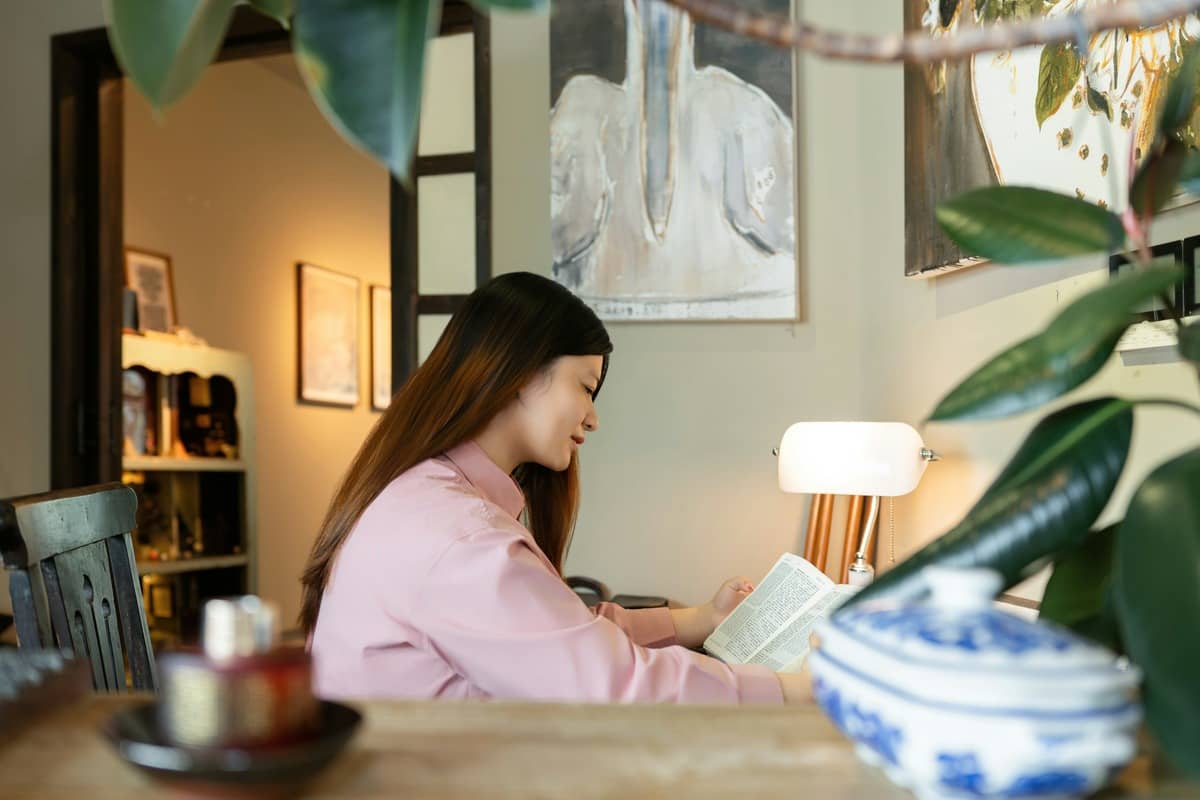
You settle into your favourite chair with a good book or the morning paper, and somehow the words just will not sit still. You tilt the page towards the window, hold it further away, and still find yourself squinting. If that feels familiar, the print may not be the problem at all - very often, it is the light.
Choosing the right reading lamp is one of the simplest, kindest changes you can make, and for most people over 60 it can bring the pleasure of a good book or the daily crossword back within easy reach. One honest note first: a good lamp improves reading *comfort* and reduces eye strain - but it is not a treatment for any eye condition, and it never replaces a proper sight test.
The short version
✓ Ageing eyes need about three times more light at 60 than at 20. That is normal, not a fault.
✓ Aim for 800–1,500 lumens, ideally dimmable, and bring the lamp *close* to the page.
✓ A neutral-to-daylight white (3000–4000K and up) suits reading. Choose a flicker-free LED.
✓ A lamp improves comfort, not eyesight. If reading has got noticeably harder, book an eye test.
## Why reading gets harder after 60
Ageing eyes simply need more light. By around the age of 60, most people need **about three times more light to read comfortably than they did at 20** - a figure from the RNIB and the Macular Society, and a normal part of getting older, not a sign that anything is wrong.
Three ordinary changes cause it. The pupil grows smaller and slower to react, so less light gets in; the lens thickens and yellows, absorbing more before it reaches the back of the eye; and the eye becomes more sensitive to glare. That is why the dim ceiling light that suited you at 30 now leaves the page looking flat and grey.
The good news is that this is easily solved: give your eyes the extra light they are asking for, and reading becomes far less of an effort. Better light looks after your reading *comfort*, though - only an eye test can look after your eye *health*, so a recent, noticeable change is always worth having checked.
## How much light do you need? (brightness, not watts)
Most of us grew up buying bulbs by wattage, but watts measure the electricity a bulb uses, not how bright it is. Brightness is measured in **lumens**: an old 60-watt bulb gives out around 800 lumens, a 100-watt bulb around 1,550. For a reading lamp for someone over 60, aim for roughly **800 to 1,500 lumens**, ideally one you can turn down when you do not need it all.
The one tip worth remembering
What matters is not the bulb's raw power but how much light lands *on the page*, and that depends heavily on distance. Because light falls away sharply, **halving the distance between the lamp and your book gives roughly four times as much light on the page** (Macular Society). An adjustable, dimmable lamp you can pull in close beats a powerful one stranded across the room.
## What colour of light is best for reading?
Light comes in different “temperatures”, measured in kelvin (K). Warm light looks yellowish and cosy; cool light looks bright and blue-white. Neither is right or wrong - it depends on the task and your comfort.
**Around 2700K - warm, yellow-white.** Cosy evening reading and winding down.
**3000–4000K - neutral, soft white.** Everyday reading - a comfortable sweet spot.
**5000K and above - cool, “daylight” blue-white.** Fine detail and small print, but can feel harsh.
The RNIB and Macular Society suggest a “daylight”-style bulb for reading and advise avoiding coloured or tinted ones, because a cooler light sharpens contrast for small print. In practice, many people find a neutral **3000–4000K** white more comfortable for long spells, and a daylight bulb a little glary. A lamp with adjustable colour, or at least a dimmer, bridges the two: crisp light by day, something warmer in the evening.
## LED - and are LED lamps bad for your eyes?
For a reading lamp, **LED is the clear choice**. LEDs give instant, bright light, last for years, cost little to run, and - importantly for safety - stay cool to the touch rather than getting hot like old bulbs.
You may have heard worries about “blue light” from LEDs harming the eyes. To be straightforward: there is no strong evidence that ordinary household LED lamps damage the eyes in everyday use. The one genuine evening consideration is sleep, not damage - cool, bright light late at night can make it a little harder to drop off, which a warmer setting solves.
● **Flicker-free.** Cheap LEDs can flicker invisibly, tiring the eyes over a long read.
● **A colour rendering index (CRI) of 90 or above,** so colours look natural on the page.
## Types of reading lamp compared
There is no single best reading lamp for everyone - it depends on where and how you like to read.
Table / task lamp
Everyday reading beside a chair; versatile and easy to pull close.
**Watch:** needs a steady side table within reach.
Floor / standing lamp
Armchair reading hands-free, with light coming over the shoulder onto the page.
**Watch:** takes up floor space, and keep the trailing cable tidy.
Adjustable gooseneck
Aiming light precisely onto the page and cutting glare, thanks to a bendable neck.
**Watch:** a cheap, floppy neck may not hold its position.
Clip-on / clamp lamp
Reading in bed, or where floor and table space is tight.
**Watch:** needs a sturdy edge to grip, and is usually smaller.
Magnifier lamp
Small print, sewing or crosswords when glasses alone are not quite enough.
**Watch:** bulkier and pricier - needing one for everyday text is a cue to book an eye test.
As a rough guide to cost, a good LED reading lamp can be found from around £10 to £30, mid-range adjustable lamps run roughly £30 to £80, and specialist “daylight” reading lights go from about £150 up to £400. Spending more is not essential - position and adjustability matter far more than price.
## Where to put your lamp: position beats power
Getting the position right often makes a bigger difference than a brighter bulb. A few simple habits from the sight-loss charities go a long way:
● **Aim the light onto the page, not into your eyes.** Keep the lamp head below eye level and slightly to the side, so light does not bounce off glossy pages back at you.
● **Light from over the shoulder.** If you are right-handed, place the lamp to your left; if left-handed, to your right, so your hand does not shadow the page.
● **Keep a little background light on.** Reading from a single bright pool in a dark room increases glare and tires the eyes, because they keep re-adjusting.
● **Mind the cable.** Keep the flex clear of walkways; a cordless, rechargeable model can move from armchair to bedside without a trailing lead.
● **Make it easy on the hands.** If grip is not what it was, choose large, tactile controls or a touch panel, a stable weighted base, and a memory function that recalls your last setting.
## When a lamp isn't enough
Here is the important part. Better light makes reading more comfortable and reduces strain, but it does not sharpen your eyesight, change your prescription, or treat or prevent any eye condition. Reading in poor light causes temporary tiredness, not permanent harm - but some signs are worth acting on.
Book a sight test if…
● words blur or run together, even under a good lamp
● you suddenly need far more light than you used to
● one eye seems weaker than the other
● reading tires your eyes quickly, or it has simply been a while since your last check
Regular sight tests do more than update your glasses, and catching changes early genuinely helps. It is worth knowing [how often over-60s should have their eyes tested](https://homesightonline.co.uk/news-and-articles/how-often-should-over-60s-have-their-eyes-tested) - generally at least every two years, or sooner if advised - and that once you are 60 you are entitled to an [NHS-funded home eye test](https://homesightonline.co.uk/eye-care). If getting to an optician is difficult, HomeSight brings the whole test to you; you can read [what happens during a home eye test](https://homesightonline.co.uk/news-and-articles/home-eye-test-what-to-expect) before you decide.
Reading harder than it used to be?
A gentle, NHS-funded eye test in your own armchair can get to the bottom of it.
[Book a free home eye test](https://homesightonline.co.uk/contact)
## Frequently asked questions
How many lumens do I need for reading?
Aim for roughly 800 to 1,500 lumens, ideally dimmable, and bring the lamp close to the page - halving the distance gives about four times the light, so a modest lamp near the page beats a powerful one across the room.
What colour temperature is best for reading?
A neutral white around 3000–4000K suits everyday reading; a cooler “daylight” bulb (5000K and up) sharpens very small print but can feel harsh, while a warmer 2700K is kinder in the evening before sleep.
Are LED lamps bad for your eyes?
No - there is no strong evidence that ordinary household LED lamps harm the eyes. They are a good choice for reading: bright, long-lasting, cheap to run and cool to the touch. Choose a flicker-free LED and use a warmer setting in the evening to help with sleep.
Is a floor lamp or a table lamp better for reading?
Both work well: a floor lamp suits an armchair with no table nearby, while a table lamp is ideal beside a chair or bed where you can pull it close. Good positioning matters more than the type.
What's the best light for reading in bed?
A warmer light around 2700K is gentler before sleep. A clip-on or small adjustable bedside lamp with a directional head, angled onto the page from the side, lights the book rather than your face and won't disturb a partner.
Can a better reading lamp improve my eyesight?
No. A good lamp improves comfort and reduces eye strain, but it cannot sharpen your vision or change your prescription. Persistent difficulty reading is a reason to book an eye test rather than buy a brighter lamp.
We bring the eye test to your armchair
A full, NHS-funded home eye test across London, the South East and the South Midlands - no travel, no waiting room. Call 0800 080 6095 or book online.
[Book your home eye test](https://homesightonline.co.uk/contact)
This article is general information, not a diagnosis. A reading lamp can make reading more comfortable, but it is not a substitute for a sight test. If your vision has changed, please have your eyes checked.
The service behind this article
## Book a home eye test
Our GOC-registered optometrists carry out a full [home eye test](https://homesightonline.co.uk/eye-care) in your own armchair, with the same equipment used on the high street. Free under the NHS if you qualify, and £30 privately.
[See what a home eye test includes →](https://homesightonline.co.uk/eye-care)
[← Back to the Journal](https://homesightonline.co.uk/news-and-articles)
## A short, useful email, once a month.
One article, one product recommendation, and a few NHS updates that affect people receiving care at home. No marketing, easy to unsubscribe.
Email address
Subscribe
Sorry, that didn’t go through. Please try again.
We'll never share your email. One-click unsubscribe in every issue.
Subscribed, see you next month.

Your home-visiting optician and audiologist. NHS-funded home eye care and private ear-wax removal & hearing care, delivered to your door across London, the South East and the South Midlands.
### Explore
- [About](https://homesightonline.co.uk/about)
- [Eye Care](https://homesightonline.co.uk/eye-care)
- [Hearing Care](https://homesightonline.co.uk/hearing-care)
- [Care Homes](https://homesightonline.co.uk/care-homes)
### More
- [News and Articles](https://homesightonline.co.uk/news-and-articles)
- [Careers](https://homesightonline.co.uk/careers)
- [FAQs](https://homesightonline.co.uk/faqs)
- [Contact](https://homesightonline.co.uk/contact)
- [Feedback & Complaints](https://homesightonline.co.uk/feedback-and-complaints)
- [Privacy & Terms](https://homesightonline.co.uk/privacy)
### Contact
[**0800 080 6095**](tel:08000806095) Mon–Fri 09:00–17:00 Outside these hours, leave your details and the team will get back to you as soon as we are back in the office.
[info@homesightonline.co.uk](mailto:info@homesightonline.co.uk)
261 Hale End Road,
Woodford Green IG8 9NB
**Areas we cover:** London, Essex, Hertfordshire, Kent, Surrey, Sussex, Berkshire and the South Midlands. Don't see your area? [Get in touch](https://homesightonline.co.uk/contact).
© Home Sight UK Ltd 2026 · Trading as HomeSight · Company No. 07136215 · Home Sound UK Ltd · Company No. 17025680
[FAQs](https://homesightonline.co.uk/faqs) [Contact](https://homesightonline.co.uk/contact) [Careers](https://homesightonline.co.uk/careers)
[Call Now Call Closed](tel:08000806095) [Book Visit](https://homesightonline.co.uk/#book)
We're closed
Open Mon–Fri, 9am–5pm
Leave your details and the team will get back to you as soon as we are back in the office.
[Request a visit](https://homesightonline.co.uk/#book) [Call anyway](tel:08000806095)
[Chat on WhatsApp](https://wa.me/447341548117?text=Hi%20HomeSight%2C%20I%27d%20like%20to%20ask%20about%20a%20home%20visit.)
```json
{
"@context" : "https://schema.org",
"@id" : "https://homesightonline.co.uk/news-and-articles/how-to-choose-the-best-reading-lamp-when-you-are-over-60#blogposting",
"@type" : "BlogPosting",
"articleSection" : [ "Eye Health", "Blog" ],
"author" : {
"@id" : "https://homesightonline.co.uk/news-and-articles/author/team-homesight#team",
"@type" : "Organization",
"name" : "Team HomeSight",
"parentOrganization" : {
"@id" : "https://homesightonline.co.uk/#organization"
},
"url" : "https://homesightonline.co.uk/news-and-articles/author/team-homesight"
},
"dateModified" : "2026-09-26T11:37:00+01:00",
"datePublished" : "2026-07-11T12:28:39+01:00",
"description" : "Reading harder after 60? The right lamp cuts glare and eye strain. Our plain guide covers lumens, colour and light, plus when to book an eye test.",
"headline" : "How to Choose the Best Reading Lamp When You're Over 60",
"image" : [ "https://148612291.fs1.hubspotusercontent-eu1.net/hubfs/148612291/best-reading-lamp-for-over-60s-armchair..jpg" ],
"inLanguage" : "en-GB",
"isAccessibleForFree" : true,
"isPartOf" : {
"@id" : "https://homesightonline.co.uk/#website"
},
"keywords" : [ "Eye Health", "Blog" ],
"mainEntityOfPage" : {
"@id" : "https://homesightonline.co.uk/news-and-articles/how-to-choose-the-best-reading-lamp-when-you-are-over-60#webpage"
},
"publisher" : {
"@id" : "https://homesightonline.co.uk/#organization"
},
"speakable" : {
"@type" : "SpeakableSpecification",
"cssSelector" : [ ".hsblog-post h1", ".hsblog-post .post-intro" ]
},
"timeRequired" : "PT9M",
"wordCount" : 1789
}
```
```json
{
"@context" : "https://schema.org",
"@id" : "https://homesightonline.co.uk/news-and-articles/how-to-choose-the-best-reading-lamp-when-you-are-over-60#webpage",
"@type" : "WebPage",
"about" : {
"@id" : "https://homesightonline.co.uk/#organization"
},
"breadcrumb" : {
"@id" : "https://homesightonline.co.uk/news-and-articles/how-to-choose-the-best-reading-lamp-when-you-are-over-60#breadcrumb"
},
"description" : "Reading harder after 60? The right lamp cuts glare and eye strain. Our plain guide covers lumens, colour and light, plus when to book an eye test.",
"inLanguage" : "en-GB",
"isPartOf" : {
"@id" : "https://homesightonline.co.uk/#website"
},
"name" : "Best Reading Lamp for Over-60s: How to Choose | HomeSight",
"primaryImageOfPage" : {
"@id" : "https://homesightonline.co.uk/#primary-image"
},
"url" : "https://homesightonline.co.uk/news-and-articles/how-to-choose-the-best-reading-lamp-when-you-are-over-60"
}
```
```json
{
"@context" : "https://schema.org",
"@id" : "https://homesightonline.co.uk/news-and-articles/how-to-choose-the-best-reading-lamp-when-you-are-over-60#faq",
"@type" : "FAQPage",
"isPartOf" : {
"@id" : "https://homesightonline.co.uk/news-and-articles/how-to-choose-the-best-reading-lamp-when-you-are-over-60#webpage"
},
"mainEntity" : [ {
"@type" : "Question",
"acceptedAnswer" : {
"@type" : "Answer",
"text" : "Light comes in different “temperatures”, measured in kelvin (K). Warm light looks yellowish and cosy; cool light looks bright and blue-white. Neither is right or wrong - it depends on the task and your comfort."
},
"name" : "What colour of light is best for reading?"
}, {
"@type" : "Question",
"acceptedAnswer" : {
"@type" : "Answer",
"text" : "For a reading lamp, LED is the clear choice. LEDs give instant, bright light, last for years, cost little to run, and - importantly for safety - stay cool to the touch rather than getting hot like old bulbs."
},
"name" : "LED - and are LED lamps bad for your eyes?"
} ]
}
```
```json
{
"@context" : "https://schema.org",
"@id" : "https://homesightonline.co.uk/#organization",
"@type" : [ "Optician", "MedicalBusiness", "MedicalOrganization", "LocalBusiness" ],
"address" : {
"@id" : "https://homesightonline.co.uk/#address",
"@type" : "PostalAddress",
"addressCountry" : "GB",
"addressLocality" : "Woodford Green",
"addressRegion" : "Essex",
"postalCode" : "IG8 9NB",
"streetAddress" : "261 Hale End Road"
},
"alternateName" : [ "HomeSight Eye & Hearing Care", "Home Sight", "HomeSight Online", "Home Sight Online" ],
"areaServed" : {
"@id" : "https://homesightonline.co.uk/#service-area"
},
"availableService" : [ {
"@id" : "https://homesightonline.co.uk/nhs-home-eye-tests#service-nhs-home-eye-test"
}, {
"@id" : "https://homesightonline.co.uk/eye-care#service-private-home-eye-test"
}, {
"@id" : "https://homesightonline.co.uk/hearing-care#service-home-hearing-check"
}, {
"@id" : "https://homesightonline.co.uk/earwax-removal-at-home#service-earwax-removal"
}, {
"@id" : "https://homesightonline.co.uk/hearing-aids-at-home#service-hearing-aid-fitting"
}, {
"@id" : "https://homesightonline.co.uk/hearing-aid-help#service-hearing-aid-servicing"
}, {
"@id" : "https://homesightonline.co.uk/care-homes#service-care-home-visits"
} ],
"contactPoint" : [ {
"@id" : "https://homesightonline.co.uk/#contact-bookings",
"@type" : "ContactPoint",
"areaServed" : "GB",
"availableLanguage" : "en-GB",
"contactType" : "bookings",
"description" : "Phone lines are open Monday to Friday, 09:00 to 17:00. Outside these hours, leave your details through the booking form and the team will get back to you as soon as they are back in the office.",
"email" : "info@homesightonline.co.uk",
"hoursAvailable" : {
"@type" : "OpeningHoursSpecification",
"closes" : "17:00",
"dayOfWeek" : [ "Monday", "Tuesday", "Wednesday", "Thursday", "Friday" ],
"opens" : "09:00"
},
"telephone" : "+448000806095"
}, {
"@id" : "https://homesightonline.co.uk/#contact-partnerships",
"@type" : "ContactPoint",
"areaServed" : "GB",
"availableLanguage" : "en-GB",
"contactType" : "sales",
"email" : "main@homesightonline.co.uk",
"name" : "Care homes and partnerships",
"telephone" : "+448000806095"
} ],
"currenciesAccepted" : "GBP",
"description" : "Home-visiting opticians and audiologists providing NHS-funded and private eye tests, hearing tests, hearing aids and ear wax removal at home across London, the South East and the South Midlands.",
"email" : "info@homesightonline.co.uk",
"employee" : [ {
"@id" : "https://homesightonline.co.uk/about#clinical-lead-optometry"
}, {
"@id" : "https://homesightonline.co.uk/about#clinical-lead-audiology"
} ],
"foundingDate" : "2010",
"foundingLocation" : {
"@type" : "Place",
"name" : "Woodford Green, Essex"
},
"hasCredential" : [ {
"@id" : "https://homesightonline.co.uk/#credential-nhs",
"@type" : "EducationalOccupationalCredential",
"credentialCategory" : "NHS contract",
"description" : "HomeSight has been an NHS-contracted domiciliary eye care provider since 2010.",
"name" : "NHS-contracted domiciliary sight test provider",
"validIn" : {
"@type" : "Country",
"name" : "United Kingdom"
}
} ],
"hasMap" : "https://maps.google.com/?cid=556103530139105098",
"identifier" : [ {
"@type" : "PropertyValue",
"name" : "Companies House company number",
"value" : "07136215"
} ],
"image" : {
"@id" : "https://homesightonline.co.uk/#primary-image"
},
"knowsAbout" : [ "Domiciliary eye care", "NHS domiciliary sight testing", "Home hearing tests", "Hearing aids", "Earwax removal by microsuction", "Low vision", "Care home eye and hearing care" ],
"legalName" : "Home Sight UK Ltd",
"logo" : {
"@id" : "https://homesightonline.co.uk/#logo",
"@type" : "ImageObject",
"caption" : "HomeSight",
"contentUrl" : "https://homesightonline.co.uk/hubfs/raw_assets/public/2027%20-%20Homesight/images/values/homesight-logo-horizontal.svg",
"url" : "https://homesightonline.co.uk/hubfs/raw_assets/public/2027%20-%20Homesight/images/values/homesight-logo-horizontal.svg"
},
"medicalSpecialty" : [ "Optometric", "Otolaryngologic" ],
"name" : "HomeSight",
"numberOfEmployees" : {
"@type" : "QuantitativeValue",
"value" : 40
},
"openingHoursSpecification" : [ {
"@type" : "OpeningHoursSpecification",
"closes" : "17:00",
"dayOfWeek" : [ "Monday", "Tuesday", "Wednesday", "Thursday", "Friday" ],
"opens" : "09:00"
}, {
"@type" : "OpeningHoursSpecification",
"closes" : "00:00",
"dayOfWeek" : [ "Saturday", "Sunday" ],
"opens" : "00:00"
} ],
"paymentAccepted" : [ "Cash", "Credit Card", "Debit Card", "Bank Transfer" ],
"priceRange" : "££",
"sameAs" : [ "https://www.facebook.com/HomeSightUK/", "https://www.instagram.com/homesightonline/", "https://www.linkedin.com/company/homesightukltd/", "https://uk.trustpilot.com/review/homesightonline.co.uk", "https://maps.google.com/?cid=556103530139105098" ],
"serviceArea" : {
"@id" : "https://homesightonline.co.uk/#service-area"
},
"slogan" : "Eye and hearing care in the comfort of home",
"subOrganization" : {
"@id" : "https://homesightonline.co.uk/#homesound"
},
"telephone" : "+448000806095",
"url" : "https://homesightonline.co.uk/"
}
```
```json
{
"@context" : "https://schema.org",
"@id" : "https://homesightonline.co.uk/#homesound",
"@type" : "Organization",
"address" : {
"@type" : "PostalAddress",
"addressCountry" : "GB",
"addressLocality" : "Addlestone",
"addressRegion" : "Surrey",
"postalCode" : "KT15 3HA",
"streetAddress" : "24b The Broadway, New Haw"
},
"description" : "Joint venture owned equally by Home Sight UK Ltd and Ear Health Solutions Limited. Home Sound UK Ltd provides HomeSight's private hearing care: hearing assessments, earwax removal, hearing aid fitting and aftercare.",
"email" : "info@homesightonline.co.uk",
"identifier" : [ {
"@type" : "PropertyValue",
"name" : "Companies House company number",
"value" : "17025680"
} ],
"legalName" : "Home Sound UK Ltd",
"name" : "HomeSound",
"parentOrganization" : [ {
"@id" : "https://homesightonline.co.uk/#organization"
}, {
"@type" : "Organization",
"name" : "Ear Health Solutions Limited"
} ],
"telephone" : "+448000806095"
}
```
```json
{
"@context" : "https://schema.org",
"@id" : "https://homesightonline.co.uk/#service-area",
"@type" : "Place",
"containsPlace" : [ {
"@type" : "AdministrativeArea",
"name" : "Greater London"
}, {
"@type" : "AdministrativeArea",
"name" : "Essex"
}, {
"@type" : "AdministrativeArea",
"name" : "Hertfordshire"
}, {
"@type" : "AdministrativeArea",
"name" : "Kent"
}, {
"@type" : "AdministrativeArea",
"name" : "Surrey"
}, {
"@type" : "AdministrativeArea",
"name" : "East Sussex"
}, {
"@type" : "AdministrativeArea",
"name" : "West Sussex"
}, {
"@type" : "AdministrativeArea",
"name" : "Berkshire"
}, {
"@type" : "AdministrativeArea",
"name" : "Milton Keynes"
}, {
"@type" : "AdministrativeArea",
"name" : "Bedfordshire"
}, {
"@type" : "AdministrativeArea",
"name" : "Northamptonshire"
}, {
"@type" : "AdministrativeArea",
"name" : "Oxfordshire"
} ],
"name" : "HomeSight home-visit coverage: London, the South East and the South Midlands"
}
```
```json
{
"@context" : "https://schema.org",
"@id" : "https://homesightonline.co.uk/#primary-image",
"@type" : "ImageObject",
"caption" : "HomeSight home eye and hearing care",
"contentUrl" : "https://homesightonline.co.uk/hubfs/brand/homesight-social-share.png",
"url" : "https://homesightonline.co.uk/hubfs/brand/homesight-social-share.png"
}
```
```json
{
"@context" : "https://schema.org",
"@id" : "https://homesightonline.co.uk/#website",
"@type" : "WebSite",
"copyrightHolder" : {
"@id" : "https://homesightonline.co.uk/#organization"
},
"inLanguage" : "en-GB",
"name" : "HomeSight",
"publisher" : {
"@id" : "https://homesightonline.co.uk/#organization"
},
"url" : "https://homesightonline.co.uk/"
}
```
```json
{
"@context" : "https://schema.org",
"@id" : "https://homesightonline.co.uk/news-and-articles/how-to-choose-the-best-reading-lamp-when-you-are-over-60#breadcrumb",
"@type" : "BreadcrumbList",
"itemListElement" : [ {
"@type" : "ListItem",
"item" : "https://homesightonline.co.uk/",
"name" : "Home",
"position" : 1
}, {
"@type" : "ListItem",
"item" : "https://homesightonline.co.uk/news-and-articles",
"name" : "News and Articles",
"position" : 2
}, {
"@type" : "ListItem",
"name" : "How to Choose the Best Reading Lamp When You're Over 60",
"position" : 3
} ]
}
```