---
title: What Happens During a Home Eye Test? | HomeSight
description: A home eye test is a full sight test and eye health check in your own home. Discover what to expect, step by step, and who qualifies for a free NHS visit.
image: https://homesightonline.co.uk/hubfs/home-eye-test-optician-elderly-patient.jpg
---
[Skip to content](https://homesightonline.co.uk/news-and-articles/home-eye-test-what-to-expect#main)
[0800 080 6095](tel:08000806095) [info@homesightonline.co.uk](mailto:info@homesightonline.co.uk) Mon–Fri 09:00 – 17:00
[ ](https://homesightonline.co.uk/)
Eye care
[Home eye tests A full one-hour examination in your own home](https://homesightonline.co.uk/eye-care) [NHS home eye tests Free if you qualify. Check the criteria](https://homesightonline.co.uk/nhs-home-eye-tests) [Care home eye care Visits for residents, reported to your team](https://homesightonline.co.uk/care-homes)
Hearing care
[Home hearing tests Free screening, full assessment at home](https://homesightonline.co.uk/hearing-care) [Hearing aids at home Tested, fitted and followed up at home](https://homesightonline.co.uk/hearing-aids-at-home) [Earwax removal at home Microsuction by an audiologist, at home](https://homesightonline.co.uk/earwax-removal-at-home) [Hearing aid help Cleaning, repairs and servicing at home](https://homesightonline.co.uk/hearing-aid-help)
Who we help
[Families and carers Arranging care for a parent or relative](https://homesightonline.co.uk/for-families) [Care homes Over 300 homes across the South East](https://homesightonline.co.uk/care-homes) [Areas we visit London, Essex, Hertfordshire, Kent, Surrey and more](https://homesightonline.co.uk/areas-we-visit)
About
[About HomeSight An NHS-contracted home eye care provider since 2010](https://homesightonline.co.uk/about) [News and articles Guides to eye and hearing care at home](https://homesightonline.co.uk/news-and-articles) [FAQs Answers to the questions we are asked most](https://homesightonline.co.uk/faqs) [Contact Call, email, or ask for a call back](https://homesightonline.co.uk/contact)
[Book a home visit](https://homesightonline.co.uk/book-a-home-visit) [Prefer to call 0800 080 6095](tel:08000806095)
[Home](https://homesightonline.co.uk/) › [News and Articles](https://homesightonline.co.uk/news-and-articles) › What Actually Happens During a Home Eye Test
home eye test
# What Actually Happens During a Home Eye Test

By **Team HomeSight** · 13 min read · 21 June 2026 · Updated 19 October 2026 Checked for clinical accuracy by a HomeSight [GOC](https://optical.org/)-registered optometrist. [About HomeSight](https://homesightonline.co.uk/about).
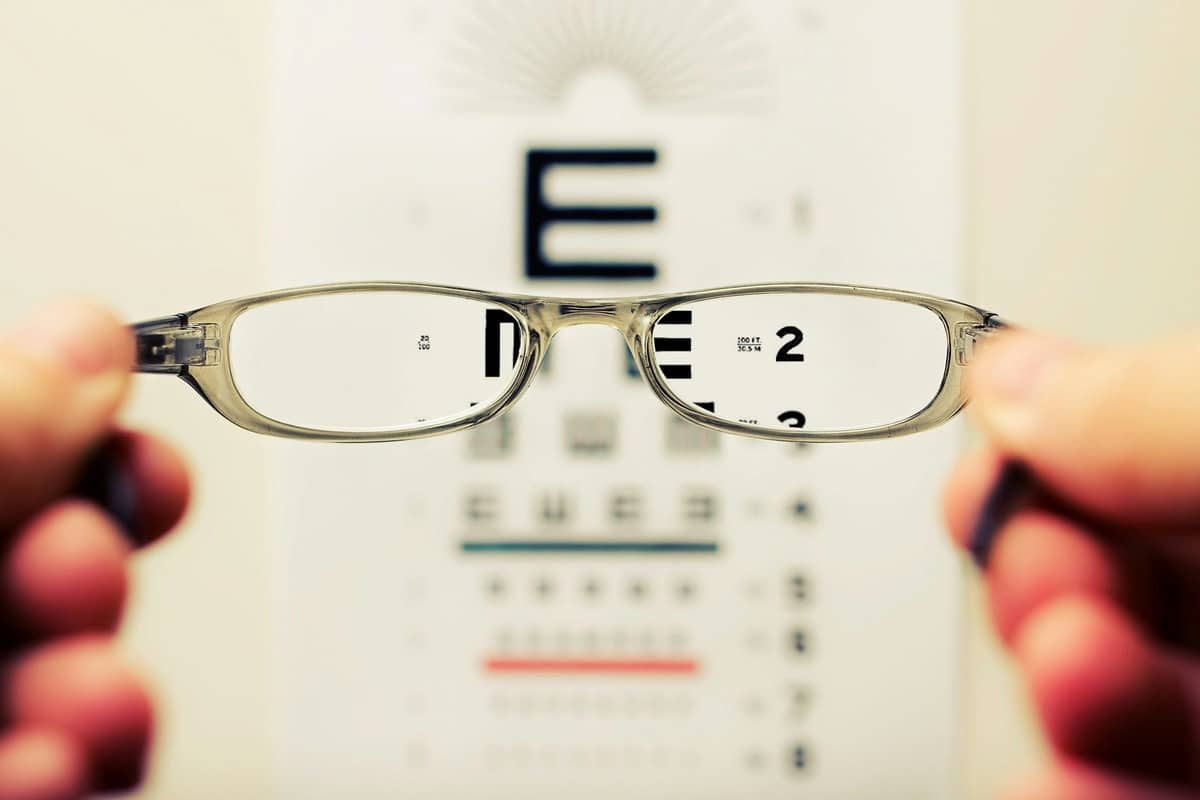
For a lot of people, the idea of an eye test still brings to mind a trip into town: the bus or the lift from a relative, the wait in a busy reception, the bright shop full of mirrors and rows of frames. If travelling has become difficult, or if a busy practice feels overwhelming, that picture can be enough to put the whole thing off for years. The good news is that it does not have to be that way. A home eye test brings the same careful, professional sight test to your living room, your bedside or your favourite armchair, with no travel and no waiting room in sight.
If you have never had a sight test at home, you may be wondering what it actually involves. Is it a quick, watered-down version of the real thing? Will the optician really be able to check your eye health properly without all the big machines? It is a fair question, and the honest answer is reassuring: a home eye test is a full, thorough examination. Below, we walk you through exactly what happens, step by step, so you know what to expect before you [book your home visit](https://homesightonline.co.uk/#book).
## Who a home eye test is really for
A home eye test, sometimes called a [domiciliary sight test](https://homesightonline.co.uk/eye-care), is designed for anyone who cannot easily get to a high-street optician on their own. That includes older people who no longer feel steady on their feet, people living with a long-term illness or disability, those recovering from a stroke or an operation, and anyone whose memory or anxiety makes a busy shop a stressful place to be. It also covers people living in [care homes](https://homesightonline.co.uk/care-homes) and sheltered housing.
In many cases, the whole visit is free. If you are aged 60 or over, or you receive certain benefits, or you have been diagnosed with conditions such as diabetes or glaucoma, you usually qualify for an NHS-funded sight test. When you also find it difficult or impossible to leave home unaccompanied because of a physical or mental condition, the NHS will normally fund the home visit itself too. If you do not meet the NHS criteria, an affordable private home eye test is available to anyone who would simply prefer to be seen at home. Not sure which applies to you? You can [check your eligibility here](https://homesightonline.co.uk/eye-care#eligibility), and our team is always happy to talk it through on the phone.
## Before the visit: getting ready
Booking is the easy part. You can call us or fill in a short form online, and we will ask a few gentle questions about your needs and whether you, or the person you care for, qualify for NHS funding. There is no obligation at this stage, and no pressure to decide anything on the spot.
When the appointment is arranged, there is very little for you to do to prepare. It helps to have your current glasses to hand, including any spare or older pairs, as the optician will want to see what you are using now. If you have a list of the medicines you take, pop it on the table, because some medication can affect your eyes. If you wear hearing aids, keep them in so that you can chat comfortably throughout. Beyond that, you only need to be yourself, in your own home, in whatever spot you find most comfortable.
One small thing worth knowing: a home eye test usually takes a little longer than the same test on the high street. That is not because anything is rushed in a shop, but because our clinician brings all the equipment with them and sets it up around you. We see that extra time as a good thing. It means the appointment moves at your pace, with room for questions and rest if you need it.
## When the optician arrives
The first thing you will notice is that there are no white coats and no clinical hush. Our opticians arrive with a friendly knock and a kit bag rather than a van full of bulky machines. Inside that bag is a complete, portable version of everything you would find in a consulting room. Modern home-visit equipment has come a very long way, and it now lets us carry out the same checks in your home that you would receive in a practice.
A typical kit includes a trial frame, which is an adjustable spectacle frame that holds different test lenses, and a set of those lenses. There is a tablet or a fold-out chart for reading letters, a retinoscope and an ophthalmoscope for shining a light into the eye, and a handheld slit lamp that gives a close, magnified view of the front of the eye. We can also bring a portable camera that photographs the back of the eye, and a small device for checking your field of vision. None of it is intimidating to look at, and your optician will explain each piece as they go.
Once everything is set up, usually on a table or tray beside you, the examination begins. From here on, it follows a clear order, although the exact sequence can shift depending on your needs.
## Step one: a proper conversation
Every good eye test starts with a chat, not a chart. Your optician will ask about your general health, any conditions you live with, the medicines you take, and whether anyone in your family has had eye problems such as glaucoma or macular degeneration. They will ask how you have been getting on with your sight: whether reading has become harder, whether the television looks blurry, whether you have noticed glare when you are out, or whether you have had any headaches, double vision or floaters.
This part matters far more than people often realise. Your answers help the optician understand what to look for and put everything they find into context. It is also your chance to mention the little things you might brush off, such as struggling to read price labels, finding the edges of steps harder to judge, or feeling less confident pouring a cup of tea. These everyday details often point to changes that are easy to correct once they are spotted.
## Step two: checking how well you see
Next comes the part most people picture when they think of an eye test: reading letters on a chart. This is the visual acuity test, and it measures how clearly you can see at different distances. At home, the chart may be shown on a tablet held at the correct distance, or on a printed chart, and you will be asked to read down the rows as far as you comfortably can. If reading letters is difficult, perhaps because of memory problems or communication needs, we can use shapes, numbers or matching cards instead. Nobody is ever made to feel they are sitting an exam.
The aim here is simply to see where your sight is now, before any lenses are introduced. It gives us a clear starting point for the next step.
## Step three: finding your prescription
This is the heart of the sight test. Using the trial frame and that set of lenses, your optician works out whether glasses would help and, if so, exactly what strength you need. You may remember being asked the familiar question, "Which is clearer, one or two?" as different lenses are slipped in and out. For people who find that hard to answer, the optician can use a technique called retinoscopy, where they shine a light into your eye and read how it reflects back to measure your prescription objectively, without you having to say a word.
Either way, the result is an accurate, up-to-date prescription. If you already wear glasses, this tells us whether your eyes have changed and whether a new pair would make a real difference to your day-to-day life.
## Step four: looking at the health of your eyes
A sight test is about much more than working out a prescription. Some of the most important parts of the appointment are the health checks, because your eyes can reveal early signs of conditions long before you notice any symptoms yourself.
Using the handheld slit lamp, your optician examines the front of your eye in fine detail, including the surface, the lens and the lids. This is where signs of cataracts and dry eye often first appear. With the ophthalmoscope, and often a small portable camera, they then look at the back of the eye, examining the retina and the optic nerve. Here they are watching for the early footprints of age-related macular degeneration, glaucoma, and even general health conditions such as diabetes and high blood pressure, which frequently show up in the eyes before anywhere else.
Catching these things early genuinely matters. Many serious eye conditions are far more treatable when they are found before they affect your vision. A regular home eye test is one of the simplest ways to keep an eye on all of this, quite literally, without you having to leave the house.
[Book your home visit](https://homesightonline.co.uk/#book)
## Step five: pressure, fields and eye movements
Depending on what you and your optician have discussed, a few further checks may follow. Where it is helpful, we can measure the pressure inside your eyes using a gentle handheld instrument, which is one of the ways glaucoma is detected. You will not need to worry about a sudden puff of air; home visits use calmer, more comfortable methods.
We may also check your field of vision, which is how much you can see around the edges while looking straight ahead, as gaps here can be an early warning sign worth investigating. Finally, the optician may ask you to follow a light or a small target with your eyes to see how well the eye muscles are working together. All of this is quick, painless and easy to do from your chair.
## How long does it all take?
Most home eye tests take somewhere between thirty minutes and an hour. The length depends on how many checks are needed and how much time we spend setting up and chatting along the way. We never try to hurry. One of the quiet benefits of being tested at home is that the appointment fits around you, rather than the other way round. If you need a short break, a cup of tea, or a moment to gather your thoughts, that is completely fine.
## Choosing glasses, in your own front room
If the test shows that you would benefit from glasses, or that your current pair needs updating, the next part is rather enjoyable. Your optician brings a selection of frames to you, so you can try them on in good light, see how they feel, and ask the people around you what they think. There is no rushing past rows of displays and no pressure from a busy shop floor. You choose at your own pace, with honest advice on what suits both your face and your prescription, and on lenses that match how you actually spend your days.
Once you have chosen, your glasses are made up and then delivered and fitted back at your home. The optician adjusts them so they sit comfortably and correctly, checks that you can see well through them, and shows you how to look after them. If anything is not quite right, it is sorted out there and then.
## What happens if something needs a closer look
Occasionally, an eye test picks up something that needs further attention, such as the early stages of cataracts or a sign that should be reviewed by a specialist. If that happens, your optician will explain clearly what they have found, in plain language, and arrange the right referral to your GP or to the hospital eye service. You will never be left wondering what comes next. Spotting these things, and making sure they are acted on, is one of the main reasons regular sight tests are so worthwhile.
## Care that adapts to the person
Not everyone experiences an eye test in the same way, and a good home visit takes that fully into account. Our clinicians are experienced in supporting people living with dementia, those who have had a stroke, and anyone who finds communication tiring or difficult. The test can be broken into shorter stages, explained more slowly, or adapted with picture-based charts and objective measurements that do not rely on lots of talking. Familiar surroundings often help enormously. People tend to feel calmer and more themselves at home, which in turn makes the whole examination easier and more accurate.
For families, there is real peace of mind in this. You can be there alongside your relative, hear what the optician finds, and feel confident that their sight and eye health are being properly looked after without anyone having to face a stressful journey.
---
## Can you test your eyes at home yourself?
Only up to a point. Online vision checks and phone apps can show whether your eyesight seems to have changed, and that is a useful nudge to book a test. They are not a sight test, though, so they can’t check the health of your eyes or give you a prescription for glasses.
That matters because some serious eye conditions give no early warning. The NHS says glaucoma doesn’t usually cause symptoms, and it’s normally found at a routine eye test. If it has been more than two years since your last test, [book a home eye test](https://homesightonline.co.uk/book-a-home-visit) and we will check both how clearly you see and the health of your eyes, in your own home.
---
## Bringing it all together
A home eye test is not a shortcut or a lesser version of the real thing. It is a complete sight test and eye health check, delivered with patience, in the one place you feel most at ease. From the first friendly conversation to the final fitting of a new pair of glasses, every step is carried out by a qualified optician using professional, portable equipment, at a pace that suits you.
If you, or someone you care for, has been putting off an eye test because getting to the high street feels like too much, there really is a simpler way. Clear sight and healthy eyes make an enormous difference to confidence, safety and independence, and looking after them should never mean a difficult trip out. When you are ready, we will bring expert eye care to your door.
[Book your home visit](https://homesightonline.co.uk/#book)
The service behind this article
## Book a home eye test
Our GOC-registered optometrists carry out a full [home eye test](https://homesightonline.co.uk/eye-care) in your own armchair, with the same equipment used on the high street. Free under the NHS if you qualify, and £30 privately.
[See what a home eye test includes →](https://homesightonline.co.uk/eye-care)
[← Back to the Journal](https://homesightonline.co.uk/news-and-articles)
## A short, useful email, once a month.
One article, one product recommendation, and a few NHS updates that affect people receiving care at home. No marketing, easy to unsubscribe.
Email address
Subscribe
Sorry, that didn’t go through. Please try again.
We'll never share your email. One-click unsubscribe in every issue.
Subscribed, see you next month.

Your home-visiting optician and audiologist. NHS-funded home eye care and private ear-wax removal & hearing care, delivered to your door across London, the South East and the South Midlands.
### Explore
- [About](https://homesightonline.co.uk/about)
- [Eye Care](https://homesightonline.co.uk/eye-care)
- [Hearing Care](https://homesightonline.co.uk/hearing-care)
- [Care Homes](https://homesightonline.co.uk/care-homes)
### More
- [News and Articles](https://homesightonline.co.uk/news-and-articles)
- [Careers](https://homesightonline.co.uk/careers)
- [FAQs](https://homesightonline.co.uk/faqs)
- [Contact](https://homesightonline.co.uk/contact)
- [Feedback & Complaints](https://homesightonline.co.uk/feedback-and-complaints)
- [Privacy & Terms](https://homesightonline.co.uk/privacy)
### Contact
[**0800 080 6095**](tel:08000806095) Mon–Fri 09:00–17:00 Outside these hours, leave your details and the team will get back to you as soon as we are back in the office.
[info@homesightonline.co.uk](mailto:info@homesightonline.co.uk)
261 Hale End Road,
Woodford Green IG8 9NB
**Areas we cover:** London, Essex, Hertfordshire, Kent, Surrey, Sussex, Berkshire and the South Midlands. Don't see your area? [Get in touch](https://homesightonline.co.uk/contact).
© Home Sight UK Ltd 2026 · Trading as HomeSight · Company No. 07136215 · Home Sound UK Ltd · Company No. 17025680
[FAQs](https://homesightonline.co.uk/faqs) [Contact](https://homesightonline.co.uk/contact) [Careers](https://homesightonline.co.uk/careers)
[Call Now Call Closed](tel:08000806095) [Book Visit](https://homesightonline.co.uk/#book)
We're closed
Open Mon–Fri, 9am–5pm
Leave your details and the team will get back to you as soon as we are back in the office.
[Request a visit](https://homesightonline.co.uk/#book) [Call anyway](tel:08000806095)
[Chat on WhatsApp](https://wa.me/447341548117?text=Hi%20HomeSight%2C%20I%27d%20like%20to%20ask%20about%20a%20home%20visit.)
```json
{
"@context" : "https://schema.org",
"@id" : "https://homesightonline.co.uk/news-and-articles/home-eye-test-what-to-expect#blogposting",
"@type" : "BlogPosting",
"articleSection" : [ "home eye test", "Blog" ],
"author" : {
"@id" : "https://homesightonline.co.uk/news-and-articles/author/team-homesight#team",
"@type" : "Organization",
"name" : "Team HomeSight",
"parentOrganization" : {
"@id" : "https://homesightonline.co.uk/#organization"
},
"url" : "https://homesightonline.co.uk/news-and-articles/author/team-homesight"
},
"dateModified" : "2026-10-19T09:28:53+01:00",
"datePublished" : "2026-06-21T13:28:06+01:00",
"description" : "A home eye test is a full sight test and eye health check in your own home. Discover what to expect, step by step, and who qualifies for a free NHS visit.",
"headline" : "What Actually Happens During a Home Eye Test",
"image" : [ "https://148612291.fs1.hubspotusercontent-eu1.net/hubfs/148612291/home-eye-test-optician-elderly-patient.jpg" ],
"inLanguage" : "en-GB",
"isAccessibleForFree" : true,
"isPartOf" : {
"@id" : "https://homesightonline.co.uk/#website"
},
"keywords" : [ "home eye test", "Blog" ],
"mainEntityOfPage" : {
"@id" : "https://homesightonline.co.uk/news-and-articles/home-eye-test-what-to-expect#webpage"
},
"publisher" : {
"@id" : "https://homesightonline.co.uk/#organization"
},
"speakable" : {
"@type" : "SpeakableSpecification",
"cssSelector" : [ ".hsblog-post h1", ".hsblog-post .post-intro" ]
},
"timeRequired" : "PT12M",
"wordCount" : 2440
}
```
```json
{
"@context" : "https://schema.org",
"@id" : "https://homesightonline.co.uk/news-and-articles/home-eye-test-what-to-expect#webpage",
"@type" : "WebPage",
"about" : {
"@id" : "https://homesightonline.co.uk/#organization"
},
"breadcrumb" : {
"@id" : "https://homesightonline.co.uk/news-and-articles/home-eye-test-what-to-expect#breadcrumb"
},
"description" : "A home eye test is a full sight test and eye health check in your own home. Discover what to expect, step by step, and who qualifies for a free NHS visit.",
"inLanguage" : "en-GB",
"isPartOf" : {
"@id" : "https://homesightonline.co.uk/#website"
},
"name" : "What Happens During a Home Eye Test? | HomeSight",
"primaryImageOfPage" : {
"@id" : "https://homesightonline.co.uk/#primary-image"
},
"url" : "https://homesightonline.co.uk/news-and-articles/home-eye-test-what-to-expect"
}
```
```json
{
"@context" : "https://schema.org",
"@id" : "https://homesightonline.co.uk/#organization",
"@type" : [ "Optician", "MedicalBusiness", "MedicalOrganization", "LocalBusiness" ],
"address" : {
"@id" : "https://homesightonline.co.uk/#address",
"@type" : "PostalAddress",
"addressCountry" : "GB",
"addressLocality" : "Woodford Green",
"addressRegion" : "Essex",
"postalCode" : "IG8 9NB",
"streetAddress" : "261 Hale End Road"
},
"alternateName" : [ "HomeSight Eye & Hearing Care", "Home Sight", "HomeSight Online", "Home Sight Online" ],
"areaServed" : {
"@id" : "https://homesightonline.co.uk/#service-area"
},
"availableService" : [ {
"@id" : "https://homesightonline.co.uk/nhs-home-eye-tests#service-nhs-home-eye-test"
}, {
"@id" : "https://homesightonline.co.uk/eye-care#service-private-home-eye-test"
}, {
"@id" : "https://homesightonline.co.uk/hearing-care#service-home-hearing-check"
}, {
"@id" : "https://homesightonline.co.uk/earwax-removal-at-home#service-earwax-removal"
}, {
"@id" : "https://homesightonline.co.uk/hearing-aids-at-home#service-hearing-aid-fitting"
}, {
"@id" : "https://homesightonline.co.uk/hearing-aid-help#service-hearing-aid-servicing"
}, {
"@id" : "https://homesightonline.co.uk/care-homes#service-care-home-visits"
} ],
"contactPoint" : [ {
"@id" : "https://homesightonline.co.uk/#contact-bookings",
"@type" : "ContactPoint",
"areaServed" : "GB",
"availableLanguage" : "en-GB",
"contactType" : "bookings",
"description" : "Phone lines are open Monday to Friday, 09:00 to 17:00. Outside these hours, leave your details through the booking form and the team will get back to you as soon as they are back in the office.",
"email" : "info@homesightonline.co.uk",
"hoursAvailable" : {
"@type" : "OpeningHoursSpecification",
"closes" : "17:00",
"dayOfWeek" : [ "Monday", "Tuesday", "Wednesday", "Thursday", "Friday" ],
"opens" : "09:00"
},
"telephone" : "+448000806095"
}, {
"@id" : "https://homesightonline.co.uk/#contact-partnerships",
"@type" : "ContactPoint",
"areaServed" : "GB",
"availableLanguage" : "en-GB",
"contactType" : "sales",
"email" : "main@homesightonline.co.uk",
"name" : "Care homes and partnerships",
"telephone" : "+448000806095"
} ],
"currenciesAccepted" : "GBP",
"description" : "Home-visiting opticians and audiologists providing NHS-funded and private eye tests, hearing tests, hearing aids and ear wax removal at home across London, the South East and the South Midlands.",
"email" : "info@homesightonline.co.uk",
"employee" : [ {
"@id" : "https://homesightonline.co.uk/about#clinical-lead-optometry"
}, {
"@id" : "https://homesightonline.co.uk/about#clinical-lead-audiology"
} ],
"foundingDate" : "2010",
"foundingLocation" : {
"@type" : "Place",
"name" : "Woodford Green, Essex"
},
"hasCredential" : [ {
"@id" : "https://homesightonline.co.uk/#credential-nhs",
"@type" : "EducationalOccupationalCredential",
"credentialCategory" : "NHS contract",
"description" : "HomeSight has been an NHS-contracted domiciliary eye care provider since 2010.",
"name" : "NHS-contracted domiciliary sight test provider",
"validIn" : {
"@type" : "Country",
"name" : "United Kingdom"
}
} ],
"hasMap" : "https://maps.google.com/?cid=556103530139105098",
"identifier" : [ {
"@type" : "PropertyValue",
"name" : "Companies House company number",
"value" : "07136215"
} ],
"image" : {
"@id" : "https://homesightonline.co.uk/#primary-image"
},
"knowsAbout" : [ "Domiciliary eye care", "NHS domiciliary sight testing", "Home hearing tests", "Hearing aids", "Earwax removal by microsuction", "Low vision", "Care home eye and hearing care" ],
"legalName" : "Home Sight UK Ltd",
"logo" : {
"@id" : "https://homesightonline.co.uk/#logo",
"@type" : "ImageObject",
"caption" : "HomeSight",
"contentUrl" : "https://homesightonline.co.uk/hubfs/raw_assets/public/2027%20-%20Homesight/images/values/homesight-logo-horizontal.svg",
"url" : "https://homesightonline.co.uk/hubfs/raw_assets/public/2027%20-%20Homesight/images/values/homesight-logo-horizontal.svg"
},
"medicalSpecialty" : [ "Optometric", "Otolaryngologic" ],
"name" : "HomeSight",
"numberOfEmployees" : {
"@type" : "QuantitativeValue",
"value" : 40
},
"openingHoursSpecification" : [ {
"@type" : "OpeningHoursSpecification",
"closes" : "17:00",
"dayOfWeek" : [ "Monday", "Tuesday", "Wednesday", "Thursday", "Friday" ],
"opens" : "09:00"
}, {
"@type" : "OpeningHoursSpecification",
"closes" : "00:00",
"dayOfWeek" : [ "Saturday", "Sunday" ],
"opens" : "00:00"
} ],
"paymentAccepted" : [ "Cash", "Credit Card", "Debit Card", "Bank Transfer" ],
"priceRange" : "££",
"sameAs" : [ "https://www.facebook.com/HomeSightUK/", "https://www.instagram.com/homesightonline/", "https://www.linkedin.com/company/homesightukltd/", "https://uk.trustpilot.com/review/homesightonline.co.uk", "https://maps.google.com/?cid=556103530139105098" ],
"serviceArea" : {
"@id" : "https://homesightonline.co.uk/#service-area"
},
"slogan" : "Eye and hearing care in the comfort of home",
"subOrganization" : {
"@id" : "https://homesightonline.co.uk/#homesound"
},
"telephone" : "+448000806095",
"url" : "https://homesightonline.co.uk/"
}
```
```json
{
"@context" : "https://schema.org",
"@id" : "https://homesightonline.co.uk/#homesound",
"@type" : "Organization",
"address" : {
"@type" : "PostalAddress",
"addressCountry" : "GB",
"addressLocality" : "Addlestone",
"addressRegion" : "Surrey",
"postalCode" : "KT15 3HA",
"streetAddress" : "24b The Broadway, New Haw"
},
"description" : "Joint venture owned equally by Home Sight UK Ltd and Ear Health Solutions Limited. Home Sound UK Ltd provides HomeSight's private hearing care: hearing assessments, earwax removal, hearing aid fitting and aftercare.",
"email" : "info@homesightonline.co.uk",
"identifier" : [ {
"@type" : "PropertyValue",
"name" : "Companies House company number",
"value" : "17025680"
} ],
"legalName" : "Home Sound UK Ltd",
"name" : "HomeSound",
"parentOrganization" : [ {
"@id" : "https://homesightonline.co.uk/#organization"
}, {
"@type" : "Organization",
"name" : "Ear Health Solutions Limited"
} ],
"telephone" : "+448000806095"
}
```
```json
{
"@context" : "https://schema.org",
"@id" : "https://homesightonline.co.uk/#service-area",
"@type" : "Place",
"containsPlace" : [ {
"@type" : "AdministrativeArea",
"name" : "Greater London"
}, {
"@type" : "AdministrativeArea",
"name" : "Essex"
}, {
"@type" : "AdministrativeArea",
"name" : "Hertfordshire"
}, {
"@type" : "AdministrativeArea",
"name" : "Kent"
}, {
"@type" : "AdministrativeArea",
"name" : "Surrey"
}, {
"@type" : "AdministrativeArea",
"name" : "East Sussex"
}, {
"@type" : "AdministrativeArea",
"name" : "West Sussex"
}, {
"@type" : "AdministrativeArea",
"name" : "Berkshire"
}, {
"@type" : "AdministrativeArea",
"name" : "Milton Keynes"
}, {
"@type" : "AdministrativeArea",
"name" : "Bedfordshire"
}, {
"@type" : "AdministrativeArea",
"name" : "Northamptonshire"
}, {
"@type" : "AdministrativeArea",
"name" : "Oxfordshire"
} ],
"name" : "HomeSight home-visit coverage: London, the South East and the South Midlands"
}
```
```json
{
"@context" : "https://schema.org",
"@id" : "https://homesightonline.co.uk/#primary-image",
"@type" : "ImageObject",
"caption" : "HomeSight home eye and hearing care",
"contentUrl" : "https://homesightonline.co.uk/hubfs/brand/homesight-social-share.png",
"url" : "https://homesightonline.co.uk/hubfs/brand/homesight-social-share.png"
}
```
```json
{
"@context" : "https://schema.org",
"@id" : "https://homesightonline.co.uk/#website",
"@type" : "WebSite",
"copyrightHolder" : {
"@id" : "https://homesightonline.co.uk/#organization"
},
"inLanguage" : "en-GB",
"name" : "HomeSight",
"publisher" : {
"@id" : "https://homesightonline.co.uk/#organization"
},
"url" : "https://homesightonline.co.uk/"
}
```
```json
{
"@context" : "https://schema.org",
"@id" : "https://homesightonline.co.uk/news-and-articles/home-eye-test-what-to-expect#breadcrumb",
"@type" : "BreadcrumbList",
"itemListElement" : [ {
"@type" : "ListItem",
"item" : "https://homesightonline.co.uk/",
"name" : "Home",
"position" : 1
}, {
"@type" : "ListItem",
"item" : "https://homesightonline.co.uk/news-and-articles",
"name" : "News and Articles",
"position" : 2
}, {
"@type" : "ListItem",
"name" : "What Actually Happens During a Home Eye Test",
"position" : 3
} ]
}
```