---
title: "Hearing Loss and Dementia: The Real Link | HomeSight"
description: Hearing loss is the largest modifiable risk factor for dementia. Here is what the evidence shows, why it matters, and how a home hearing check helps.
image: https://homesightonline.co.uk/hubfs/home-hearing-test-older-adult-audiologist.jpg
---
[Skip to content](https://homesightonline.co.uk/news-and-articles/hearing-loss-and-dementia#main)
[0800 080 6095](tel:08000806095) [info@homesightonline.co.uk](mailto:info@homesightonline.co.uk) Mon–Fri 09:00 – 17:00
[ ](https://homesightonline.co.uk/)
Eye care
[Home eye tests A full one-hour examination in your own home](https://homesightonline.co.uk/eye-care) [NHS home eye tests Free if you qualify. Check the criteria](https://homesightonline.co.uk/nhs-home-eye-tests) [Care home eye care Visits for residents, reported to your team](https://homesightonline.co.uk/care-homes)
Hearing care
[Home hearing tests Free screening, full assessment at home](https://homesightonline.co.uk/hearing-care) [Hearing aids at home Tested, fitted and followed up at home](https://homesightonline.co.uk/hearing-aids-at-home) [Earwax removal at home Microsuction by an audiologist, at home](https://homesightonline.co.uk/earwax-removal-at-home) [Hearing aid help Cleaning, repairs and servicing at home](https://homesightonline.co.uk/hearing-aid-help)
Who we help
[Families and carers Arranging care for a parent or relative](https://homesightonline.co.uk/for-families) [Care homes Over 300 homes across the South East](https://homesightonline.co.uk/care-homes) [Areas we visit London, Essex, Hertfordshire, Kent, Surrey and more](https://homesightonline.co.uk/areas-we-visit)
About
[About HomeSight An NHS-contracted home eye care provider since 2010](https://homesightonline.co.uk/about) [News and articles Guides to eye and hearing care at home](https://homesightonline.co.uk/news-and-articles) [FAQs Answers to the questions we are asked most](https://homesightonline.co.uk/faqs) [Contact Call, email, or ask for a call back](https://homesightonline.co.uk/contact)
[Book a home visit](https://homesightonline.co.uk/book-a-home-visit) [Prefer to call 0800 080 6095](tel:08000806095)
[Home](https://homesightonline.co.uk/) › [News and Articles](https://homesightonline.co.uk/news-and-articles) › Hearing Loss and Dementia: What the Research Really Says
Blog
# Hearing Loss and Dementia: What the Research Really Says

By **Team HomeSight** · 11 min read · 19 July 2026 · Updated 26 September 2026 Checked for clinical accuracy by a HomeSight [HCPC](https://www.hcpc-uk.org/)-registered audiologist. [About HomeSight](https://homesightonline.co.uk/about).
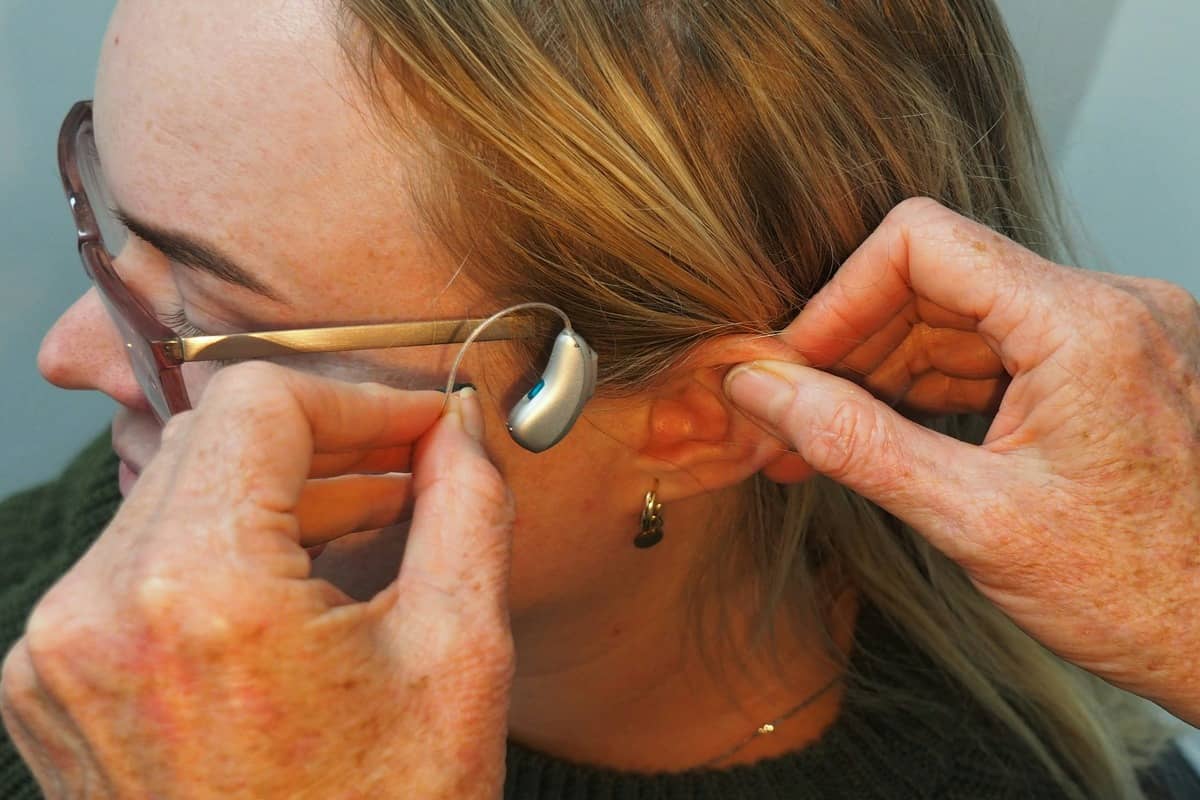
Hearing & Brain Health
Hearing loss rarely arrives with a bang. It creeps in so slowly that most people adjust without realising: the television goes up a notch, the phone moves to the better ear, busy rooms become tiring rather than enjoyable. For years it can feel like a minor inconvenience. Which is why it surprises so many families to learn that hearing is now considered one of the most important things we can look after for the sake of the brain, not just the ears.
The connection between hearing loss and dementia has become one of the most discussed findings in ageing research. It has also been widely oversimplified. This article sets out what the evidence actually shows, what it does not show, and what you can practically do about it, whether for yourself or for a parent you are quietly worried about.
The short version
✓ Hearing loss is the single largest *modifiable* risk factor for dementia identified by the Lancet Commission.
✓ It is a risk factor, not a certainty. Hearing loss does not mean dementia will follow.
✓ The largest trial to date found treating hearing loss slowed cognitive decline in those at higher risk.
✓ People wait around ten years on average before acting. That delay is the real problem.
## How strong is the link between hearing loss and dementia?
The most authoritative work in this area comes from the Lancet Commission on dementia prevention, a group of international researchers who periodically review the evidence and estimate how much of the world's dementia could theoretically be avoided by addressing specific risks. Across their reports, hearing loss has consistently emerged at or near the top of the list of factors we can actually do something about.
7 to 8%
of dementia cases worldwide are associated with hearing loss, making it the largest single risk factor we can potentially change.
Separate long-term studies have also found that the degree of hearing loss matters. Broadly, research has associated mild hearing loss with roughly double the risk of cognitive decline compared with normal hearing, moderate loss with around three times, and severe loss with a considerably higher risk again. Those figures sound alarming in isolation, so they deserve some important context.
An honest word about what this means
These studies show an **association**, not proof that hearing loss causes dementia. Many people with hearing loss never develop dementia, and plenty of people with excellent hearing do. What the evidence supports is more measured and more useful: hearing loss is one of the few risk factors that can be treated, so it is well worth treating.
## Why would the ears affect the brain at all?
Researchers have proposed three explanations, and they are not mutually exclusive. Most likely, all three play a part.
1\. The brain works harder to listen
When sound arrives degraded, the brain has to fill in the gaps. That effort borrows capacity from memory, concentration and planning. It is why a long conversation in a noisy restaurant can leave someone with hearing loss genuinely exhausted, and why they may struggle to recall what was said.
2\. People quietly withdraw
When following a conversation becomes hard work, invitations get declined and the phone gets answered less often. Social isolation and loneliness are themselves recognised risk factors for cognitive decline, so this withdrawal compounds the problem in a way that is easy to miss from the outside.
3\. Under-stimulated hearing pathways change
Brain imaging studies have found reduced volume in the areas that process sound in people with untreated hearing loss. The brain appears to reorganise when it receives less input, which may make processing both sound and other information less efficient over time.
Taken together, these mechanisms explain why the profession has shifted its language. A hearing check is no longer framed purely as a test of the ears. It is increasingly seen as part of looking after long-term brain health, alongside blood pressure, activity and staying socially connected.
## Can hearing aids reduce the risk? What the biggest trial found
This is the question everyone wants answered, and until recently the honest reply was that nobody knew. The evidence was observational, which cannot separate cause from coincidence. Then came ACHIEVE, the largest randomised controlled trial of its kind, following nearly a thousand adults aged 70 to 84 with untreated mild to moderate hearing loss over three years. Half received hearing aids and audiological support; half received a general health education programme.
48%
slower cognitive decline over three years among participants already at higher risk, in the group who received hearing treatment.
That headline figure comes with a genuine caveat, and it matters. Across the whole study population, the difference between the two groups was not statistically significant. The striking benefit appeared in a pre-specified subgroup of participants who were older, had more risk factors and were declining faster to begin with. Among those at the very highest risk, the slowing was greater still.
So the fair conclusion is not that hearing aids prevent dementia. It is that treating hearing loss appears to make the most difference for the people who have the most to lose, and that three years is a short window in which to measure something that develops over decades. Notably, the trial also found clear improvements in communication, social functioning and loneliness across participants. Those benefits are worth having in their own right, whatever the long-term cognitive picture turns out to be.
## The real problem: how long people wait
Around 18 million adults in the UK are deaf, have hearing loss or live with tinnitus, a figure revised upwards in recent years as better population data became available. Yet the average person waits roughly a decade from first noticing a change to seeking help. Ten years is a long time to spend straining to follow conversations, and a long time for the withdrawal described above to take hold.
The reasons for waiting are understandable. Hearing loss is gradual, so there is no obvious moment that demands action. It still carries a faint stigma that eyesight never has, even though nobody thinks twice about reading glasses. And for older people, particularly anyone who finds travel difficult, the practical hurdle of getting to an appointment is often the final barrier. That last one, at least, is easily solved: you can [book your appointment](https://homesightonline.co.uk/#book) and have the whole thing done at home.
## Signs it may be time for a hearing check
Because the change is gradual, families often spot it before the person does. Any of these is worth acting on:
The TV keeps getting louder Asking people to repeat themselves Struggling in busy rooms Phone calls feel harder Mishearing rather than not hearing Ringing or buzzing Avoiding social occasions
One point often missed: a sudden change in hearing, or a blocked feeling in one ear, is frequently just earwax rather than hearing loss. That is quick to check and quick to resolve, which is another good reason to have someone look properly rather than assume the worst.
## What happens at a home hearing check
A [hearing check at home](https://homesightonline.co.uk/hearing-care)is unhurried and completely painless. At HomeSight, an HCPC-registered audiologist comes to you, so there is no travel, no waiting room and no unfamiliar clinic. The appointment starts with a relaxed conversation about what you have noticed and what you would like help with. Your audiologist then examines both ears, checks for wax, and carries out a full hearing assessment where it is needed.
Afterwards, everything is explained in plain English: what your hearing looks like now, whether wax or hearing loss is behind the change, and what the sensible next step is. If hearing aids would help, the options are set out clearly and without pressure. If they would not, we will say so.
FREE home hearing screening
✓ Full examination of both ears, including a check for earwax
✓ A full hearing assessment where needed (£30, refunded if you go ahead with hearing aids from us)
✓ Your results explained clearly, with no jargon and no obligation
✓ No GP referral and no waiting list
Noticed a change in your hearing?
A £30 hearing check at home, from an HCPC-registered audiologist.
[Book your appointment](https://homesightonline.co.uk/#book)
## If hearing aids are recommended, what actually happens?
Plenty of people picture the bulky, whistling devices of thirty years ago. Modern hearing aids bear almost no resemblance to them. Most are small, rechargeable and discreet, and many connect to a phone or television directly, so a call or a programme can be streamed straight into the ear.
If a hearing aid would genuinely help, it is fitted in your own home and tuned to your specific hearing profile rather than handed over as an off-the-shelf device. That personalised setup is what separates a hearing aid someone actually wears from one that ends up in a drawer. Fitting and ongoing aftercare are included, and adjustments can be made as you settle in.
It is worth being realistic about the first few weeks. Sounds that have faded over years come back all at once, and the brain needs a little time to recalibrate. Rustling paper and traffic can feel intrusive at first. This settles, usually within a month, provided the aids are worn consistently rather than saved for special occasions. Wearing them daily is the single biggest predictor of whether someone gets the benefit, both for conversation and for the brain health reasons described above.
There is never any obligation. If a check shows your hearing is fine, or that earwax was the culprit all along, we will tell you plainly and that will be the end of it.
## Simple things that make conversations easier today
Whether or not hearing aids end up being part of the picture, small adjustments help a great deal, and they cost nothing:
● Face the person and let them see your mouth. Lip reading fills more gaps than people realise.
● Speak clearly and a little slower rather than louder. Shouting distorts speech.
● Turn off background noise before starting a conversation, not halfway through it.
● Rephrase rather than repeat. A different sentence often lands where the same one did not.
## Frequently asked questions
Does hearing loss cause dementia?
No. Research shows a strong association, and hearing loss is classed as a risk factor, but it is not a cause and it is certainly not a diagnosis. Many people with hearing loss never develop dementia.
Will wearing hearing aids protect my memory?
The evidence is encouraging rather than conclusive. The largest trial found meaningfully slower cognitive decline among people already at higher risk, along with clear gains in communication and reduced loneliness for everyone.
At what age should I start having my hearing checked?
There is no fixed rule, but a baseline check from around 60, and whenever you or your family notice a change, is sensible. Earlier is better than later, given how long most people wait.
My relative refuses to get their hearing tested. What can I do?
Resistance is usually about the hassle or the stigma rather than the test itself. Removing the journey helps enormously, as does framing it as a simple check rather than a step towards hearing aids. A home visit with no obligation is often the easiest first yes.
## The sensible conclusion
Hearing loss is not a sentence, and no one should read this and panic. What the research does justify is a change of attitude. For decades, poor hearing has been treated as a harmless consequence of getting older, something to be put up with. We now know it is linked to how well the brain ages, and it is one of the very few risk factors that is straightforward to identify and treat.
The decision in front of most people is not really about hearing aids. It is simply whether to find out where their hearing stands, rather than waiting another decade. That part is easy, affordable, and can be done in your own front room.
We come to you across London and the South East
Greater London, Essex, Hertfordshire, Kent, Surrey, Sussex, Berkshire and the South Midlands. Check your postcode and arrange a visit at a time that suits you.
[Book your appointment in your area](https://homesightonline.co.uk/contact)
This article is general information, not medical advice or a diagnosis. If you are worried about your hearing or your memory, or about someone you care for, please speak to your GP or arrange a professional hearing assessment.
The service behind this article
## Book a home hearing test
Our HCPC-registered audiologists carry out a full [home hearing test](https://homesightonline.co.uk/hearing-care) in your own living room, usually within days. A hearing screening is free, and a comprehensive assessment is £30, refunded if you go ahead with hearing aids from us.
[See how a home hearing test works →](https://homesightonline.co.uk/hearing-care)
[← Back to the Journal](https://homesightonline.co.uk/news-and-articles)
## A short, useful email, once a month.
One article, one product recommendation, and a few NHS updates that affect people receiving care at home. No marketing, easy to unsubscribe.
Email address
Subscribe
Sorry, that didn’t go through. Please try again.
We'll never share your email. One-click unsubscribe in every issue.
Subscribed, see you next month.

Your home-visiting optician and audiologist. NHS-funded home eye care and private ear-wax removal & hearing care, delivered to your door across London, the South East and the South Midlands.
### Explore
- [About](https://homesightonline.co.uk/about)
- [Eye Care](https://homesightonline.co.uk/eye-care)
- [Hearing Care](https://homesightonline.co.uk/hearing-care)
- [Care Homes](https://homesightonline.co.uk/care-homes)
### More
- [News and Articles](https://homesightonline.co.uk/news-and-articles)
- [Careers](https://homesightonline.co.uk/careers)
- [FAQs](https://homesightonline.co.uk/faqs)
- [Contact](https://homesightonline.co.uk/contact)
- [Feedback & Complaints](https://homesightonline.co.uk/feedback-and-complaints)
- [Privacy & Terms](https://homesightonline.co.uk/privacy)
### Contact
[**0800 080 6095**](tel:08000806095) Mon–Fri 09:00–17:00 Outside these hours, leave your details and the team will get back to you as soon as we are back in the office.
[info@homesightonline.co.uk](mailto:info@homesightonline.co.uk)
261 Hale End Road,
Woodford Green IG8 9NB
**Areas we cover:** London, Essex, Hertfordshire, Kent, Surrey, Sussex, Berkshire and the South Midlands. Don't see your area? [Get in touch](https://homesightonline.co.uk/contact).
© Home Sight UK Ltd 2026 · Trading as HomeSight · Company No. 07136215 · Home Sound UK Ltd · Company No. 17025680
[FAQs](https://homesightonline.co.uk/faqs) [Contact](https://homesightonline.co.uk/contact) [Careers](https://homesightonline.co.uk/careers)
[Call Now Call Closed](tel:08000806095) [Book Visit](https://homesightonline.co.uk/#book)
We're closed
Open Mon–Fri, 9am–5pm
Leave your details and the team will get back to you as soon as we are back in the office.
[Request a visit](https://homesightonline.co.uk/#book) [Call anyway](tel:08000806095)
[Chat on WhatsApp](https://wa.me/447341548117?text=Hi%20HomeSight%2C%20I%27d%20like%20to%20ask%20about%20a%20home%20visit.)
```json
{
"@context" : "https://schema.org",
"@id" : "https://homesightonline.co.uk/news-and-articles/hearing-loss-and-dementia#blogposting",
"@type" : "BlogPosting",
"articleSection" : [ "Blog", "Hearing Care" ],
"author" : {
"@id" : "https://homesightonline.co.uk/news-and-articles/author/team-homesight#team",
"@type" : "Organization",
"name" : "Team HomeSight",
"parentOrganization" : {
"@id" : "https://homesightonline.co.uk/#organization"
},
"url" : "https://homesightonline.co.uk/news-and-articles/author/team-homesight"
},
"dateModified" : "2026-09-26T11:36:59+01:00",
"datePublished" : "2026-07-19T21:33:38+01:00",
"description" : "Hearing loss is the largest modifiable risk factor for dementia. Here is what the evidence shows, why it matters, and how a home hearing check helps.",
"headline" : "Hearing Loss and Dementia: What the Research Really Says",
"image" : [ "https://148612291.fs1.hubspotusercontent-eu1.net/hubfs/148612291/home-hearing-test-older-adult-audiologist.jpg" ],
"inLanguage" : "en-GB",
"isAccessibleForFree" : true,
"isPartOf" : {
"@id" : "https://homesightonline.co.uk/#website"
},
"keywords" : [ "Blog", "Hearing Care" ],
"mainEntityOfPage" : {
"@id" : "https://homesightonline.co.uk/news-and-articles/hearing-loss-and-dementia#webpage"
},
"publisher" : {
"@id" : "https://homesightonline.co.uk/#organization"
},
"speakable" : {
"@type" : "SpeakableSpecification",
"cssSelector" : [ ".hsblog-post h1", ".hsblog-post .post-intro" ]
},
"timeRequired" : "PT10M",
"wordCount" : 2076
}
```
```json
{
"@context" : "https://schema.org",
"@id" : "https://homesightonline.co.uk/news-and-articles/hearing-loss-and-dementia#webpage",
"@type" : "WebPage",
"about" : {
"@id" : "https://homesightonline.co.uk/#organization"
},
"breadcrumb" : {
"@id" : "https://homesightonline.co.uk/news-and-articles/hearing-loss-and-dementia#breadcrumb"
},
"description" : "Hearing loss is the largest modifiable risk factor for dementia. Here is what the evidence shows, why it matters, and how a home hearing check helps.",
"inLanguage" : "en-GB",
"isPartOf" : {
"@id" : "https://homesightonline.co.uk/#website"
},
"name" : "Hearing Loss and Dementia: The Real Link | HomeSight",
"primaryImageOfPage" : {
"@id" : "https://homesightonline.co.uk/#primary-image"
},
"url" : "https://homesightonline.co.uk/news-and-articles/hearing-loss-and-dementia"
}
```
```json
{
"@context" : "https://schema.org",
"@id" : "https://homesightonline.co.uk/news-and-articles/hearing-loss-and-dementia#faq",
"@type" : "FAQPage",
"isPartOf" : {
"@id" : "https://homesightonline.co.uk/news-and-articles/hearing-loss-and-dementia#webpage"
},
"mainEntity" : [ {
"@type" : "Question",
"acceptedAnswer" : {
"@type" : "Answer",
"text" : "The most authoritative work in this area comes from the Lancet Commission on dementia prevention, a group of international researchers who periodically review the evidence and estimate how much of the world's dementia could theoretically be avoided by addressing specific risks. Across their reports, hearing loss has consistently emerged at or near the top of the list of factors we can actually do something about."
},
"name" : "How strong is the link between hearing loss and dementia?"
}, {
"@type" : "Question",
"acceptedAnswer" : {
"@type" : "Answer",
"text" : "Researchers have proposed three explanations, and they are not mutually exclusive: the brain works harder to listen, people quietly withdraw, and under-stimulated hearing pathways change. Most likely, all three play a part. A hearing check is no longer framed purely as a test of the ears. It is increasingly seen as part of looking after long-term brain health, alongside blood pressure, activity and staying socially connected."
},
"name" : "Why would the ears affect the brain at all?"
}, {
"@type" : "Question",
"acceptedAnswer" : {
"@type" : "Answer",
"text" : "Plenty of people picture the bulky, whistling devices of thirty years ago. Modern hearing aids bear almost no resemblance to them. Most are small, rechargeable and discreet, and many connect to a phone or television directly, so a call or a programme can be streamed straight into the ear."
},
"name" : "If hearing aids are recommended, what actually happens?"
} ]
}
```
```json
{
"@context" : "https://schema.org",
"@id" : "https://homesightonline.co.uk/#organization",
"@type" : [ "Optician", "MedicalBusiness", "MedicalOrganization", "LocalBusiness" ],
"address" : {
"@id" : "https://homesightonline.co.uk/#address",
"@type" : "PostalAddress",
"addressCountry" : "GB",
"addressLocality" : "Woodford Green",
"addressRegion" : "Essex",
"postalCode" : "IG8 9NB",
"streetAddress" : "261 Hale End Road"
},
"alternateName" : [ "HomeSight Eye & Hearing Care", "Home Sight", "HomeSight Online", "Home Sight Online" ],
"areaServed" : {
"@id" : "https://homesightonline.co.uk/#service-area"
},
"availableService" : [ {
"@id" : "https://homesightonline.co.uk/nhs-home-eye-tests#service-nhs-home-eye-test"
}, {
"@id" : "https://homesightonline.co.uk/eye-care#service-private-home-eye-test"
}, {
"@id" : "https://homesightonline.co.uk/hearing-care#service-home-hearing-check"
}, {
"@id" : "https://homesightonline.co.uk/earwax-removal-at-home#service-earwax-removal"
}, {
"@id" : "https://homesightonline.co.uk/hearing-aids-at-home#service-hearing-aid-fitting"
}, {
"@id" : "https://homesightonline.co.uk/hearing-aid-help#service-hearing-aid-servicing"
}, {
"@id" : "https://homesightonline.co.uk/care-homes#service-care-home-visits"
} ],
"contactPoint" : [ {
"@id" : "https://homesightonline.co.uk/#contact-bookings",
"@type" : "ContactPoint",
"areaServed" : "GB",
"availableLanguage" : "en-GB",
"contactType" : "bookings",
"description" : "Phone lines are open Monday to Friday, 09:00 to 17:00. Outside these hours, leave your details through the booking form and the team will get back to you as soon as they are back in the office.",
"email" : "info@homesightonline.co.uk",
"hoursAvailable" : {
"@type" : "OpeningHoursSpecification",
"closes" : "17:00",
"dayOfWeek" : [ "Monday", "Tuesday", "Wednesday", "Thursday", "Friday" ],
"opens" : "09:00"
},
"telephone" : "+448000806095"
}, {
"@id" : "https://homesightonline.co.uk/#contact-partnerships",
"@type" : "ContactPoint",
"areaServed" : "GB",
"availableLanguage" : "en-GB",
"contactType" : "sales",
"email" : "main@homesightonline.co.uk",
"name" : "Care homes and partnerships",
"telephone" : "+448000806095"
} ],
"currenciesAccepted" : "GBP",
"description" : "Home-visiting opticians and audiologists providing NHS-funded and private eye tests, hearing tests, hearing aids and ear wax removal at home across London, the South East and the South Midlands.",
"email" : "info@homesightonline.co.uk",
"employee" : [ {
"@id" : "https://homesightonline.co.uk/about#clinical-lead-optometry"
}, {
"@id" : "https://homesightonline.co.uk/about#clinical-lead-audiology"
} ],
"foundingDate" : "2010",
"foundingLocation" : {
"@type" : "Place",
"name" : "Woodford Green, Essex"
},
"hasCredential" : [ {
"@id" : "https://homesightonline.co.uk/#credential-nhs",
"@type" : "EducationalOccupationalCredential",
"credentialCategory" : "NHS contract",
"description" : "HomeSight has been an NHS-contracted domiciliary eye care provider since 2010.",
"name" : "NHS-contracted domiciliary sight test provider",
"validIn" : {
"@type" : "Country",
"name" : "United Kingdom"
}
} ],
"hasMap" : "https://maps.google.com/?cid=556103530139105098",
"identifier" : [ {
"@type" : "PropertyValue",
"name" : "Companies House company number",
"value" : "07136215"
} ],
"image" : {
"@id" : "https://homesightonline.co.uk/#primary-image"
},
"knowsAbout" : [ "Domiciliary eye care", "NHS domiciliary sight testing", "Home hearing tests", "Hearing aids", "Earwax removal by microsuction", "Low vision", "Care home eye and hearing care" ],
"legalName" : "Home Sight UK Ltd",
"logo" : {
"@id" : "https://homesightonline.co.uk/#logo",
"@type" : "ImageObject",
"caption" : "HomeSight",
"contentUrl" : "https://homesightonline.co.uk/hubfs/raw_assets/public/2027%20-%20Homesight/images/values/homesight-logo-horizontal.svg",
"url" : "https://homesightonline.co.uk/hubfs/raw_assets/public/2027%20-%20Homesight/images/values/homesight-logo-horizontal.svg"
},
"medicalSpecialty" : [ "Optometric", "Otolaryngologic" ],
"name" : "HomeSight",
"numberOfEmployees" : {
"@type" : "QuantitativeValue",
"value" : 40
},
"openingHoursSpecification" : [ {
"@type" : "OpeningHoursSpecification",
"closes" : "17:00",
"dayOfWeek" : [ "Monday", "Tuesday", "Wednesday", "Thursday", "Friday" ],
"opens" : "09:00"
}, {
"@type" : "OpeningHoursSpecification",
"closes" : "00:00",
"dayOfWeek" : [ "Saturday", "Sunday" ],
"opens" : "00:00"
} ],
"paymentAccepted" : [ "Cash", "Credit Card", "Debit Card", "Bank Transfer" ],
"priceRange" : "££",
"sameAs" : [ "https://www.facebook.com/HomeSightUK/", "https://www.instagram.com/homesightonline/", "https://www.linkedin.com/company/homesightukltd/", "https://uk.trustpilot.com/review/homesightonline.co.uk", "https://maps.google.com/?cid=556103530139105098" ],
"serviceArea" : {
"@id" : "https://homesightonline.co.uk/#service-area"
},
"slogan" : "Eye and hearing care in the comfort of home",
"subOrganization" : {
"@id" : "https://homesightonline.co.uk/#homesound"
},
"telephone" : "+448000806095",
"url" : "https://homesightonline.co.uk/"
}
```
```json
{
"@context" : "https://schema.org",
"@id" : "https://homesightonline.co.uk/#homesound",
"@type" : "Organization",
"address" : {
"@type" : "PostalAddress",
"addressCountry" : "GB",
"addressLocality" : "Addlestone",
"addressRegion" : "Surrey",
"postalCode" : "KT15 3HA",
"streetAddress" : "24b The Broadway, New Haw"
},
"description" : "Joint venture owned equally by Home Sight UK Ltd and Ear Health Solutions Limited. Home Sound UK Ltd provides HomeSight's private hearing care: hearing assessments, earwax removal, hearing aid fitting and aftercare.",
"email" : "info@homesightonline.co.uk",
"identifier" : [ {
"@type" : "PropertyValue",
"name" : "Companies House company number",
"value" : "17025680"
} ],
"legalName" : "Home Sound UK Ltd",
"name" : "HomeSound",
"parentOrganization" : [ {
"@id" : "https://homesightonline.co.uk/#organization"
}, {
"@type" : "Organization",
"name" : "Ear Health Solutions Limited"
} ],
"telephone" : "+448000806095"
}
```
```json
{
"@context" : "https://schema.org",
"@id" : "https://homesightonline.co.uk/#service-area",
"@type" : "Place",
"containsPlace" : [ {
"@type" : "AdministrativeArea",
"name" : "Greater London"
}, {
"@type" : "AdministrativeArea",
"name" : "Essex"
}, {
"@type" : "AdministrativeArea",
"name" : "Hertfordshire"
}, {
"@type" : "AdministrativeArea",
"name" : "Kent"
}, {
"@type" : "AdministrativeArea",
"name" : "Surrey"
}, {
"@type" : "AdministrativeArea",
"name" : "East Sussex"
}, {
"@type" : "AdministrativeArea",
"name" : "West Sussex"
}, {
"@type" : "AdministrativeArea",
"name" : "Berkshire"
}, {
"@type" : "AdministrativeArea",
"name" : "Milton Keynes"
}, {
"@type" : "AdministrativeArea",
"name" : "Bedfordshire"
}, {
"@type" : "AdministrativeArea",
"name" : "Northamptonshire"
}, {
"@type" : "AdministrativeArea",
"name" : "Oxfordshire"
} ],
"name" : "HomeSight home-visit coverage: London, the South East and the South Midlands"
}
```
```json
{
"@context" : "https://schema.org",
"@id" : "https://homesightonline.co.uk/#primary-image",
"@type" : "ImageObject",
"caption" : "HomeSight home eye and hearing care",
"contentUrl" : "https://homesightonline.co.uk/hubfs/brand/homesight-social-share.png",
"url" : "https://homesightonline.co.uk/hubfs/brand/homesight-social-share.png"
}
```
```json
{
"@context" : "https://schema.org",
"@id" : "https://homesightonline.co.uk/#website",
"@type" : "WebSite",
"copyrightHolder" : {
"@id" : "https://homesightonline.co.uk/#organization"
},
"inLanguage" : "en-GB",
"name" : "HomeSight",
"publisher" : {
"@id" : "https://homesightonline.co.uk/#organization"
},
"url" : "https://homesightonline.co.uk/"
}
```
```json
{
"@context" : "https://schema.org",
"@id" : "https://homesightonline.co.uk/news-and-articles/hearing-loss-and-dementia#breadcrumb",
"@type" : "BreadcrumbList",
"itemListElement" : [ {
"@type" : "ListItem",
"item" : "https://homesightonline.co.uk/",
"name" : "Home",
"position" : 1
}, {
"@type" : "ListItem",
"item" : "https://homesightonline.co.uk/news-and-articles",
"name" : "News and Articles",
"position" : 2
}, {
"@type" : "ListItem",
"name" : "Hearing Loss and Dementia: What the Research Really Says",
"position" : 3
} ]
}
```